


SAT Coaching in Gurgaon: A Roadmap for US Admissions

Good SAT coaching in Gurgaon should do more than teach shortcuts. The SAT tests reading, language and mathematical reasoning in a digital format, while US undergraduate admission also considers school performance, course rigour, activities, essays and recommendations. Your preparation plan needs to protect academic grades and leave enough time for the rest of the application.

Before beginning, check the current test structure and policies on the official College Board SAT website. Universities may also change their testing policies, so verify requirements for every college on your list.

Decide whether the SAT belongs in your application plan

Testing policies vary. Some universities require scores, some are test optional, and some may use scores for placement or scholarship consideration. Test optional does not automatically mean a score has no value. A strong result may provide useful academic evidence, particularly when it supports your school record.

Start with your target colleges, intended major and current academic profile. Our USA study destination guide explains the broader admissions context. For a complete profile review, use our guide to study abroad counselling in Gurgaon.

Take a diagnostic before choosing a course length

A full diagnostic reveals more than a starting score. It shows whether mistakes come from missing concepts, misreading, weak vocabulary, inefficient calculator use, poor pacing or test anxiety. The same score can hide different problems.

Your coach should review performance by domain and question type. In Reading and Writing, this may include information and ideas, craft and structure, expression of ideas and standard English conventions. In Math, it may include algebra, advanced math, problem solving, data analysis, geometry and trigonometry. The exact official labels can evolve, but the coaching principle remains: work from evidence.

Understand adaptive digital testing

The digital SAT uses a multistage adaptive structure. Your performance in an earlier module influences the difficulty of a later module. This does not mean every question must feel difficult for a good score. It means accuracy and composure matter from the beginning.

Students should practise in the official digital environment and learn how to use available tools without becoming dependent on them. Familiarity reduces avoidable errors, but strategy cannot replace mathematical and reading skills.

Build stronger Reading and Writing habits

The Reading and Writing section rewards precise comprehension and control of language. Instead of reading long material passively, practise identifying the purpose of a short passage, evaluating evidence, understanding transitions and choosing concise, grammatically correct expression.

A good review process asks:

  • What evidence in the passage supports the correct answer?
  • Why is the tempting option not fully supported?
  • Was the error caused by vocabulary, grammar, logic or speed?
  • Can I explain the rule or reasoning without looking at the answer key?

Keep a vocabulary notebook based on words encountered in context. Random word lists are less useful when you never learn how a word behaves in a sentence.

Strengthen Math before chasing speed

Math improvement begins with concept clarity. If algebraic manipulation, functions, ratios or data interpretation are weak, timed sets will only expose the same gap repeatedly. Review the concept, solve untimed examples, then add time pressure.

Use the built-in calculator thoughtfully. It can save time, but it can also encourage unnecessary computation. Many questions are faster when you recognise structure, estimate or rearrange an equation. A coach should help you compare methods and choose the most reliable one.

Review mistakes like an investigator

The students who improve fastest do not merely count incorrect answers. They classify them. Use categories such as concept gap, careless reading, calculation, time pressure, unfamiliar question type and changed answer. Write one corrective action beside every important mistake.

For example, “careless” is too vague. A better note is: “I solved for x but the question asked for 2x, so I will underline the requested quantity before calculating.” That creates a behaviour you can practise.

Coordinate SAT dates with school and applications

Gurgaon students often prepare alongside board exams, school assessments, internships and extracurricular commitments. Choose a testing window that leaves room for a retake without damaging your academic performance. Starting earlier allows shorter, more consistent study sessions.

Students taking advanced school subjects may also consider AP preparation, while some applicants compare the SAT with the ACT. Do not prepare for every exam by default. Select the tests that serve a clear admissions purpose.

What strong SAT coaching should provide

Our SAT coaching programme in Gurgaon is designed around individual gaps and a realistic calendar. When evaluating any institute, look for:

  • A full diagnostic and score analysis
  • Concept teaching for Math and language skills
  • Official-format digital practice
  • Homework matched to diagnosed weaknesses
  • Regular timed modules and full tests
  • Detailed error review rather than score reporting alone
  • Coordination with application deadlines

Large volumes of questions are not a substitute for targeted practice. Ask how the teacher will adapt the plan when your data shows improvement or a persistent gap.

Connect test preparation with the application

The SAT is one component of the application. Your counsellor should also help you shape a balanced college list, plan recommendations, develop essays and present activities accurately. A high score cannot repair a careless application, and a thoughtful application still needs an academically realistic list.

Students comparing English tests for international admission can read our PTE versus IELTS guide. The appropriate testing combination depends on the universities and the student’s profile.

Discuss your SAT and US admissions plan

Are you unsure when to take the SAT, whether to choose SAT or ACT, or how testing fits with your US college list? Share your grade, current diagnostic score, intended intake and target universities through our SAT counselling enquiry. We will help you identify the preparation problem that deserves attention first.

PTE vs IELTS for Gurgaon Students: Which Test Fits You?

The choice between PTE and IELTS should not be based on which exam a friend found easier. Both assess academic English, but they do so through different task formats and test experiences. For Gurgaon students balancing university applications, coaching and deadlines, the better test is the one that matches institutional requirements and personal strengths.

This comparison explains how to think about PTE vs IELTS for Gurgaon students without relying on myths. Test structures and policies can change, so confirm current details on the official Pearson PTE Academic and IELTS websites before registration.

Start with university and visa acceptance

Your first question is not “Which test is easier?” It is “Which test is accepted for my exact purpose?” Check every shortlisted university, programme and relevant visa route. Acceptance can differ across institutions and applicant categories. A test that suits you perfectly is not useful if a required authority does not accept it.

Students still building a destination list can review our guides for the UK, Canada, Australia and USA. Always treat general guidance as a starting point and verify the current requirement for your programme.

How the test experience differs

IELTS offers a familiar four-module structure: Listening, Reading, Writing and Speaking. Depending on the available format, candidates may take parts of the test on paper or computer, while Speaking involves a live interaction with an examiner.

PTE Academic is computer-based. Candidates speak into a microphone, type responses and complete integrated tasks that may draw on more than one language skill. Some students appreciate the consistency of a fully computer-delivered environment. Others perform more naturally when speaking to a person.

Before deciding, take a short diagnostic in both formats. The experience often reveals more than online opinions.

Speaking to a person or a microphone

This is one of the most meaningful differences. In IELTS Speaking, you respond to an examiner and can use normal conversational rhythm. You still need developed answers, clear pronunciation and relevant language, but the interaction feels human.

In PTE, you speak into a headset in a test room where other candidates may also be speaking. You need to begin promptly, maintain steady delivery and avoid letting the surrounding sound disturb you. Students who are comfortable with recording technology may prefer this. Students who rely on facial feedback may need deliberate practice.

Our IELTS coaching in Gurgaon includes examiner-style interviews, while our PTE coaching in Gurgaon focuses on microphone practice, task timing and integrated performance.

Writing and typing demands

Both tests require clear written English, but the tasks and workflow differ. IELTS candidates need to organise ideas, respond fully to the prompt and control grammar and vocabulary across extended writing. PTE includes typed tasks and integrated activities where listening or reading may contribute to the response.

Typing speed alone does not make PTE easy. You still need accurate language, attention and a reliable method. Similarly, memorised IELTS essays can fail when they do not address the question. In either exam, good coaching should teach decision-making rather than rigid scripts.

Scoring and feedback

Students often choose PTE because they expect automated scoring to be more predictable. Others choose IELTS because the band descriptors and human Speaking interaction feel more understandable. Neither system removes the need for preparation. A score report identifies performance, but improvement requires analysis of the tasks behind that score.

During coaching, ask for module-wise feedback. If your overall result is below target, you need to know whether the cause is language level, timing, misunderstanding of instructions, poor note-taking or inconsistent delivery.

Which test may suit you better?

PTE may feel suitable if you:

  • Are comfortable typing and speaking into a microphone
  • Prefer a fully computer-based testing experience
  • Can maintain concentration during integrated tasks
  • Respond well to structured, repeated practice

IELTS may feel suitable if you:

  • Prefer speaking with a person
  • Want a clear separation between the four language modules
  • Perform well in extended reading and writing tasks
  • Need a test widely recognised across your shortlisted institutions

These are tendencies, not rules. A diagnostic test and acceptance check should decide.

Preparation problems students commonly face

For PTE, common difficulties include speaking too softly, rushing, poor microphone distance, weak note-taking and losing accuracy in integrated tasks. For IELTS, students often struggle with essay development, Reading time management, unfamiliar accents or short Speaking answers.

A coaching plan should target the specific problem. Repeating full tests without correction can make an inefficient method feel permanent. Our detailed guide to IELTS preparation in Gurgaon shows how module-wise diagnosis improves study quality.

Do not switch tests too quickly

A disappointing mock score does not always mean you chose the wrong exam. It may mean you need better task knowledge, language support or feedback. Switching creates a new learning curve. Change only after checking acceptance, taking a proper diagnostic and discussing why the current format is not working.

If you are also unsure about your destination or course, start with a broader study abroad planning session. The exam should follow the admission strategy.

A practical decision checklist

  1. List every university and visa route you are considering.
  2. Confirm which tests and score levels are accepted.
  3. Try representative tasks from both exams.
  4. Assess typing, speaking comfort, attention and time management.
  5. Compare test availability with application deadlines.
  6. Choose one exam and follow a structured plan long enough to measure progress.

Get help choosing your English test

Are you confused by mixed advice, worried about Speaking, struggling with Writing or uncertain about university acceptance? Share your target country, intended intake, current English level and preferred test experience through our exam counselling form. We will help you compare the options before you spend money on registration.

IELTS Coaching in Gurgaon: A Better Preparation Plan

Students looking for IELTS coaching in Gurgaon often ask the same first question: how long will it take to reach my required band? A responsible answer depends on your current English level, module-wise strengths, target university and available study time. Two students aiming for the same overall band may need very different plans. One may struggle with Writing Task 2, while another loses marks in Listening because of spelling and attention errors.

Effective preparation begins with diagnosis. It then combines concept teaching, timed practice, individual feedback and realistic mock tests. Simply solving more questions does not guarantee improvement if nobody identifies why your answers are going wrong.

What IELTS coaching should include

A complete course should cover all four modules and explain how performance is assessed. Our IELTS coaching programme in Gurgaon is built around a baseline assessment and a preparation plan that can be adjusted for Academic or General Training candidates.

Look for these elements when comparing classes:

  • A diagnostic test before regular lessons begin
  • Clear instruction for every question type
  • Writing correction with specific comments, not only a band estimate
  • Speaking interviews that feel like the real test
  • Timed module tests and full-length mock exams
  • A record of recurring errors and improvement priorities
  • Batch sizes that allow teachers to notice individual problems

If your institute cannot explain how feedback will be delivered, the course may become a collection of worksheets rather than genuine coaching.

Begin with a module-wise diagnostic

A diagnostic test should do more than produce an overall score. It should show whether you understand the task, manage time well, read instructions carefully and use language accurately. In Writing, the teacher should examine task response, organisation, vocabulary and grammar. In Speaking, feedback should cover fluency, coherence, lexical range, grammar and pronunciation.

This information helps set priorities. A student with strong Reading and Listening may spend more guided time on Writing and Speaking. Another student may need vocabulary and comprehension work before attempting repeated mocks.

How to improve IELTS Listening

Listening errors often come from missed transitions, weak prediction or careless transfer of answers. Before the recording begins, use the available time to read questions and predict the type of answer required. During practice, review the transcript after checking answers. Identify the exact phrase that signalled the answer and the distractor that misled you.

Keep an error log with categories such as spelling, singular/plural, number format, distraction and lost concentration. Patterns become visible after several tests. Coaching is valuable when a teacher uses those patterns to prescribe focused practice instead of asking you to repeat full papers.

How to improve IELTS Reading

Reading is not a test of how quickly you can read every word. It tests whether you can locate information, recognise paraphrasing and distinguish the writer’s claims from your assumptions. Learn the logic of matching headings, True/False/Not Given, sentence completion and multiple-choice questions separately.

Timed practice matters, but accuracy comes first. Analyse why the correct answer fits and why the other options do not. Develop a habit of marking keywords, reference words and contrast signals. Gradually reduce the time once your method is stable.

Why Writing feedback is essential

Writing is the module where self-study has the clearest limitation. Students can memorise structures, but memorised essays rarely respond precisely to a new question. Good feedback explains whether your position is clear, paragraphs are logically organised, examples support the argument and vocabulary is used naturally.

For Task 1, learn how to select and compare important information instead of describing every detail. For Task 2, plan before writing. A focused argument with relevant support is stronger than a long essay filled with general statements. Revise corrected essays and write a second version. That second attempt is where much of the learning happens.

Make Speaking practice realistic

Speaking preparation should sound like conversation, not a memorised speech. Record yourself answering unfamiliar questions. Notice hesitation, repeated words, incomplete sentences and pronunciation that affects clarity. A teacher should help you extend answers naturally without teaching scripts that sound artificial.

Mock interviews also reduce anxiety. You learn how to recover after a weak answer, ask for clarification appropriately and maintain communication under time pressure.

Choose the test that suits your goals

IELTS is widely accepted, but it is not the only English test used by international institutions. Some students prefer the computer-based tasks in PTE, while others consider TOEFL for particular universities. Compare our PTE coaching guidance and TOEFL preparation before booking. Always verify acceptance with your intended universities and the relevant visa authority.

Your exam choice should also connect to your destination. Review the admission context for the UK, Canada and Australia. Requirements vary by institution, programme and applicant profile.

How long should you prepare?

There is no honest universal answer. A student who already communicates confidently may need a short period of test familiarisation and feedback. A student with gaps in grammar, vocabulary or comprehension may need a longer foundation phase. Your plan should also account for school, college or work commitments.

A useful weekly routine includes guided lessons, short daily skill practice, one or two timed modules, writing correction and regular speaking. Full mocks should become more frequent near the exam, but they should not replace skill development.

Common preparation mistakes

  • Booking the test before taking a diagnostic
  • Memorising essays and speaking answers
  • Taking many mocks without analysing errors
  • Ignoring Writing and Speaking because feedback feels uncomfortable
  • Using unofficial score promises as the main reason to choose an institute
  • Studying irregularly and attempting to compensate in the final week

Students planning a wider overseas application should also coordinate IELTS with university research and deadlines. Our guide to study abroad counselling in Gurgaon explains how exam preparation fits into the complete admissions timeline.

Tell us where your IELTS preparation is stuck

Are you repeatedly missing your target in Writing, losing time in Reading, freezing during Speaking or unsure whether IELTS is the right test? Use our counselling form to share your current score, target band, test date and weakest module. We will help you identify the next practical step.

Study Abroad Consultants in Gurgaon: A Practical Guide

Searching for study abroad consultants in Gurgaon often begins with a simple question: who can help me choose the right country and university? The real decision is more detailed. A useful consultant should help you understand your academic profile, career direction, budget, exam requirements, application timeline and visa responsibilities. The goal is not to sell a destination. It is to build a plan that still makes sense after you receive an offer.

The city is officially called Gurugram, but most students and parents still search for services using the word Gurgaon. We use both names naturally because they refer to the same place. More importantly, students here need advice that accounts for school calendars, university deadlines, entrance exams and the practical realities of applying from India.

What a good study abroad consultant should actually do

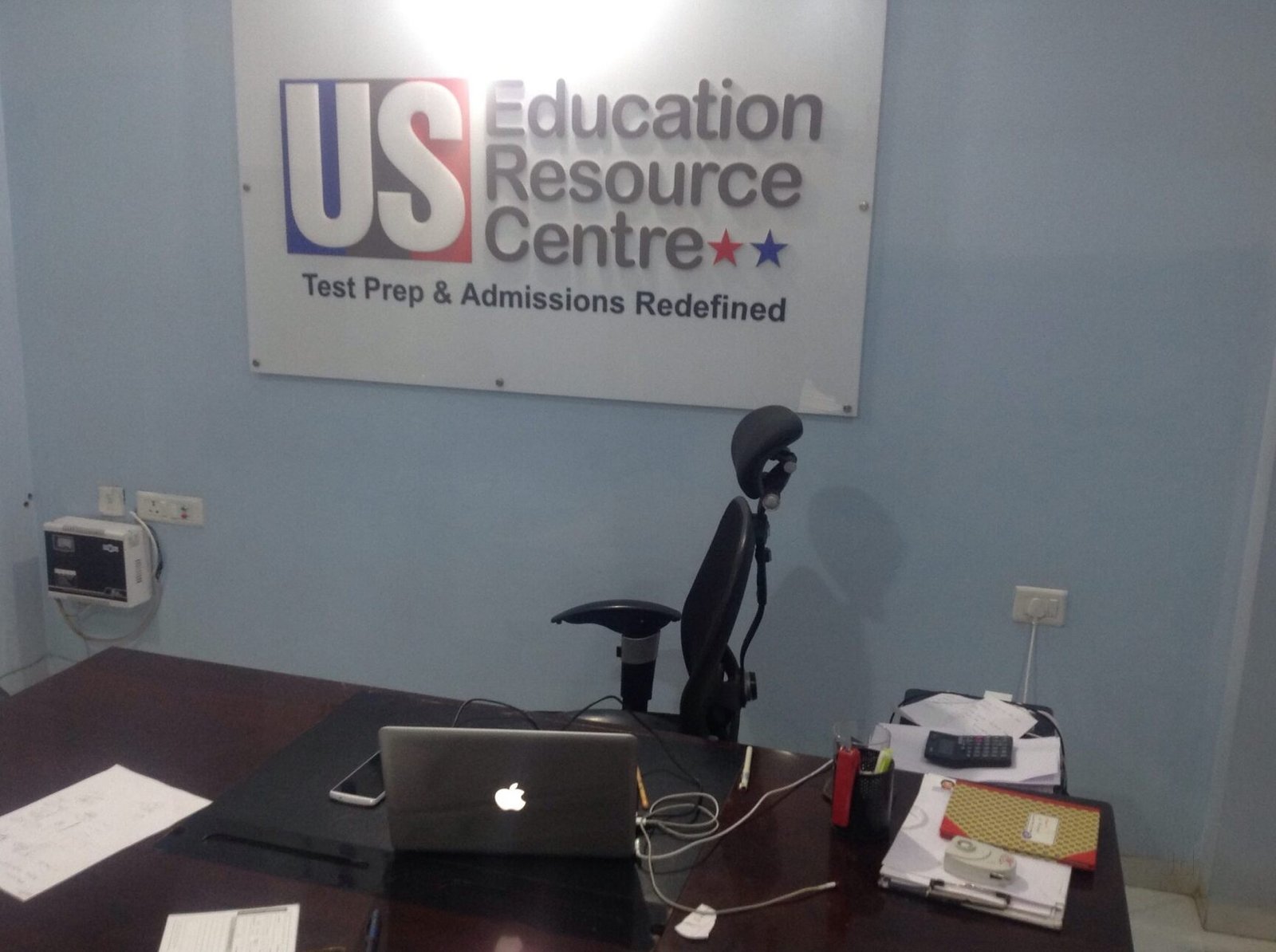
Good counselling starts before the university list. At US Education Resource Centre, the first discussion is about the student, not a brochure. Your counsellor should ask about subjects you enjoy, academic consistency, internships, work experience, family budget, preferred countries and long-term career plans. These answers shape every later decision.

A complete service normally includes:

  • Profile evaluation based on academics, activities and career goals
  • Country and course comparison without pushing one fixed option
  • University shortlisting across ambitious, realistic and safer choices
  • Guidance for IELTS, PTE, TOEFL, SAT, GRE, GMAT, ACT or AP where relevant
  • Application planning, document review, SOP and LOR guidance
  • Scholarship research and financial documentation
  • Visa preparation and pre-departure support

You can review our experience and counselling approach before booking a meeting. A transparent centre should be comfortable explaining its process, what is included and what remains the student’s responsibility.

Start with the course, not the country

Many students begin with statements such as “I want Canada” or “I want the UK” because they have heard a success story from a friend. That is understandable, but course fit must come first. A business analytics applicant, an engineering student and a design student may need completely different university lists even when they prefer the same country.

Compare the teaching style, curriculum, internship access, total cost, programme length and graduate outcomes. Explore our destination guides for the USA, UK, Canada and Australia to see how these factors differ. Your final choice should connect academic value with affordability and career relevance.

Build a university list with evidence

Rankings can introduce universities, but they cannot make the decision for you. A shortlist should consider programme modules, entry requirements, faculty interests, location, class profile, tuition, scholarships and employment support. It should also reflect your actual profile. Applying only to famous names creates unnecessary risk, while choosing only easy options can limit your opportunities.

A balanced list usually contains three groups:

  1. Ambitious choices: universities where admission is possible but highly competitive for your profile.
  2. Target choices: universities where your academics and experience align well with recent expectations.
  3. Safer choices: credible programmes where your profile is comfortably competitive and the outcome still supports your goals.

Ask your consultant to explain why every university is on the list. “It is popular” is not enough. You should be able to connect each choice to a course, cost, location or career reason.

Plan entrance and English tests early

Test preparation should support the admission plan instead of running separately from it. A student targeting undergraduate admission in the United States may need the SAT, while a postgraduate applicant may need the GRE or GMAT depending on the programme. Most international applicants also need an accepted English-language test.

If English proficiency is your immediate concern, review our IELTS coaching in Gurgaon and PTE preparation. The right test depends on university acceptance, your communication style, available test dates and the format in which you perform best. Do not book an exam simply because a friend chose it.

What to prepare before your first counselling session

You will receive better advice when the counsellor has accurate information. Bring your marksheets, degree details, resume, passport status, test scores if available and a realistic budget range. School students should also list extracurricular activities, competitions, leadership roles and subjects they may want to study.

Think about these questions before the meeting:

  • Which subjects or work tasks hold my attention for a long time?
  • Do I want a research-focused, professional or career-switching programme?
  • How much can my family comfortably invest without depending on uncertain scholarships?
  • When do I want to begin the course?
  • Which exam or application task is causing the most confusion right now?

Red flags to avoid

Be cautious when an agency guarantees admission, guarantees a visa, hides service charges or refuses to discuss universities outside a limited partner list. No ethical consultant can control an admission committee or immigration authority. You should also avoid copied statements of purpose. Admissions teams want your reasoning and evidence, not a generic life story.

Another warning sign is a rushed application. Submitting quickly is not the same as submitting well. A strong application needs time for document checks, recommendation planning, essay revision and financial preparation.

How local counselling in Gurgaon can help

Local counselling is useful when students and parents want to discuss finances, compare options together or review documents in person. It also makes test preparation and application work easier to coordinate. However, location alone does not define quality. Look for structured follow-up, experienced mentors, honest feedback and clear ownership of deadlines.

Our study abroad resources explain individual exams, destinations and application decisions in greater depth. Use them to prepare questions rather than accepting advice passively.

Discuss your study plan with an expert

Are you unsure about the country, course, exam, university list or visa process? Tell us where you are stuck. Share your current academic profile, preferred intake and the coaching or application support you need through our free counselling enquiry. We will help you turn scattered questions into a practical sequence of decisions.

It seems we can’t find what you’re looking for. Perhaps searching can help.